Thursday, October 9, 2025

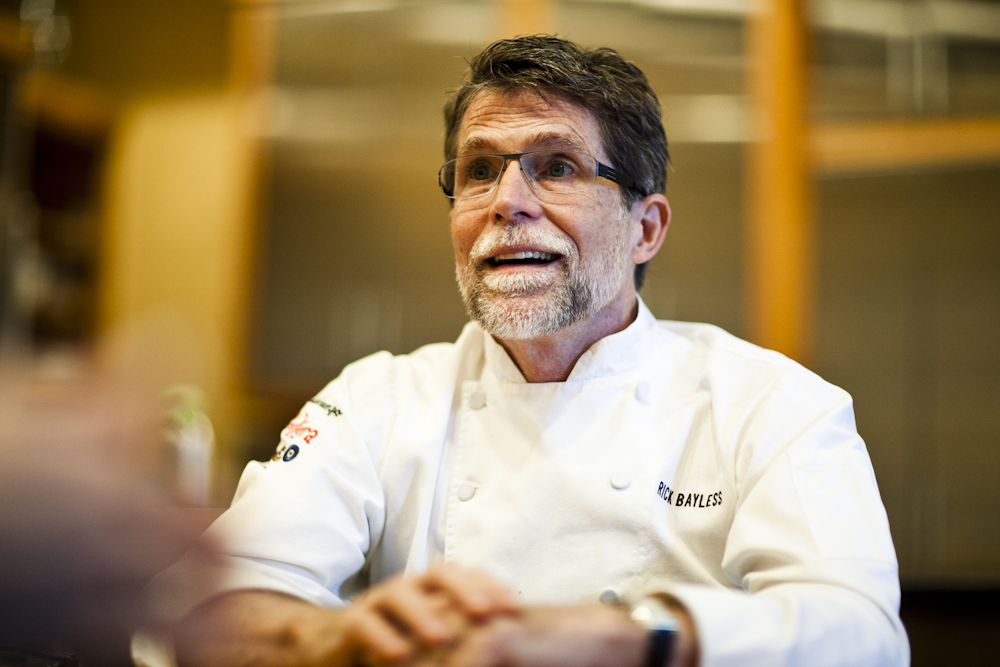
The Rick Bayless scandal

I always thought Rick Bayless looked like he did something horrible in the past but made peace with it, like the My Lai Massacre

https://adrinkwith.com/wp-content/uploads/2013/10/MG_3372.jpg
Can't you easily imagine him forcing a child soldier to play Russian Roulette

Was he rude to an animal? Part of the Klan? Whatever. He's done good since and I believe in the value of forgiveness. 

I merely want this observation made public for posterity. 

Sunday, May 25, 2025

Can slums be beautiful? (redefining aesthetics)

Typically what's beautiful is defined as what's comfortable, clean, disease-free. But most will make concessions for the beauty of ruins and urban decay. Perhaps it should less uncommon to look with the same eye for beauty, at depictions of comparatively primitive means. After all, it's the same people trying to get by, only within the context they were given. 


Thursday, May 22, 2025

Where and how the best directors got their start

https://www.indiewire.com/wp-content/uploads/2019/02/201918628_3_RWD_1380-e1554146466669.jpg
Varda

Read up on lives and general upbringing of directors to see what route they took to film. Was also interested in the busyness (population) of the locations they spent their formative years.

Wong Kar-wai - Born Shanghai, China, pop. 24m. At 5 moved to Hong Kong in Kowloon (pop. 2m) just before Cultural Revolution, strife in separation from siblings and alienation from learning two new languages at young age. Dropped out of college to work in TV in 1980.

Zhang Yimou - Born in Xi'an, China, pop. 13m. Father and family was part of losing nationalist movement in civil war, they faced difficulties. Farmed for 3 years, cotton textile for 7 years in Xianyang (pop. 5m). Took up painting and photography, sold blood to buy first photo camera. At 28 started major in cinematography. Graduated then worked for state-run studio.

Ingmar Bergman - Born Uppsala, Sweden, pop. 177k. Father strict conservative parish minister. Locked him in dark closets for bedwetting, etc. Had a magic lantern slide projector he created a private world with. Didn't graduate college but wrote plays and became an assistant director at a local theatre.

Akira Kurosawa - Born Shinagawa, Japan, pop. 422k. Father was part of samurai family. had moderate wealth. Father encouraged interest in film and arts and Akira worked as silent film narrator. Wrote an essay to be an assistant director and got the job.

Stanley Kubrick - Born NYC, USA, pop. 9m. Bad student, father bought camera young. Self-taught film in late teens. Photography to short films.

Krzysztof Kieślowski - Born in Poland. Grew up in many small towns, no career goals so went to College for Theatre Technicians because it was run by a relative. Rejected from film school twice before getting it, briefly becoming art student to avoid military service. "Despite state censorship and interdiction on foreign travel" in Poland he was able to travel for his documentaries.

George Miller - Born Chinchilla, Queensland, Australia, pop. 7k. Graduated medical school. Did 1-minute film that won first prize in student competition.

Yasujirō Ozu - Born Tokyo, Japan, pop. 14m. Around 10 sent to live in Matsusaka (pop. 157k) where he spent 11 years. Skipped school often to watch films. Uncle helped him get job as assistant in the cinematography department at Shochiku. Did a year of military service.

Elem Klimov - Born Stalingrad, Russia, pop. 1m. Father investigator for communist party. He, mother, baby brother left during battle of Stalingrad on makeshift raft. Considered journalism, went to state school for cinema.

Federico Fellini - Born Rimini, Italy, pop. 150k. Spent youth drawing and staging puppet shows. Traveled to Florence at 18 and published first cartoon in a weekly. Worked his way up publishing articles in a magazine which later opened up screenplay writing opportunities in show business.

Werner Herzog - Born Munich, Germany, pop 1.6m. After two weeks house was destroyed by allied bombing, moved to Sachrang (pop. 571), there were no tools or toys in the home, and no fathers in the village. He read a few pages of an encyclopedia to learn the basics of film and stole a camera from the Munich Film School. No one would fund his films so he worked nights as a steel welder to start.

John Milius - Born St Louis, USA, pop. 300k. Loved reading. Wanted to go to war, got rejected. Film school.

Agnès Varda - Born Ixelles, Brussels, Belgium, pop. 87k. Moved to seaside Sète, France, pop. 45k and lived on boat with family during the war. Studied art then photography. Photography for many years, then film.

Paul Verhoeven - Born Amsterdam, 1m. Moved to the Hague, Netherlands, pop. 550k, near a German military base the was repeatedly bombed. As small child found the war exciting. Father was a teacher. double major, in mathematics and physics. In last years of college also studied film.

Luis Buñuel - Born Calanda, Spain, pop. 4k. Moved to Zaragoza, pop. 475k, as one of the wealthiest families. Strict Jesuit upbringing and deeply religious until 16. Met Dali at university. Moved to Paris and worked, then film school.

Andrei Tarkovsky - Born in what is now Kostroma Oblast, Russia, pop. 280k. Born to poet father and proofreader mother. At 7, during the WW went to small town of Yuryevets. Music and art at school. Circa 22 decides to study film.

Denis Villeneuve - Born Bécancour, Quebec, Canada, pop. 12k. Private school, then film at university.

Wim Wenders - Born Düsseldorf, Germany, pop. 631k. Studied medicine and philosophy but dropped out to move to Paris and become a painter. Later went to film school.

David Lean - Born in greater London to Quakers. Uncle gave him Brownie box camera at age 10, printed and developed his films as his great hobby. Aunt told him to find a job he enjoyed so around 19 he worked his way up film-related jobs.

John Carpenter - Born Carthage, pop. 3,236. Small town upstate NY. At 5 moves to Bowling Green KY, pop. 72k. Lived in Log Cabin on campus where dad taught. Short films as teen on 8mm. Moved to CA for film school, dropped out to make feature film.

Hayao Miyazaki - Born Tokyo, Japan, pop. 14m. Father made plane parts for WW2, gifting the family affluenza. Discharged from army for wanting to be with wife and child. Some earliest memories are bombed out cities at age 4. Was told he would not live to 20 due to digestive issues, mom was bed-ridden so he and brother took over things. Wanted to draw, fell in love with the first color animated film, worked for an animation studio.

Sidney Lumet - Born Philadelphia, PA, USA, population 1.6m. Studied acting and appears on Broadway as child. Went to war for four years during WW2.

Three Studies of Lucian Freud rumored destroyed by the LA fires. Thanks Anthony Hopkins you fucking dipshit

Francis Bacon, 1969

Friday, November 22, 2024

Please update your bookmarks, donttry.org is now deepsigh.net!

 This website is changing name again on whim and moodswing, making the url www.deepsigh.net and the new title DEEP SIGH, or the home of mid.


Previous names include: lolhead, general depravity, and don't try. Bear with us as everything is brought up to date.

Additional note: a few old episodes of podcast canned due to a mix-minus issue resulting in hearing my voice off-time (disrupts your ability to think & speak), and sounding more intellectually disabled than typical.

Sunday, September 22, 2024

Happy Autumnal Equinox

Look to the spiritual guidance of Buddha and shun seasonal affective disorder

Friday, August 30, 2024

Porn should be banned

Ban it in all forms. A person taking a nude photograph of themselves should be charged with possession, and distribution if they sext.

Even if it's dirty talk. Lewd words are pornography, and therefore all romance books should be banned. Disagree? Well, anything you would hide from a young person counts, and therefore should be banned. 50 Shades of Grey, Game of Thrones, or any movie with a sex scene. Any sex not between a couple is by its nature gratuitous.

Now, you may argue within the context of two persons dating some of this should be allowed. But why? People are allowed to date as many people as they like and break-up at will. It would be easy to claim, "I, Jane Onlyfans, am in a relationship with any and all willing participants, please send donos 💖," thus, creating a slippery slope. Unless dating like marriage becomes state-sanctioned, it can lead to pornographic-like behavior and therefore it is a moral. hazard.

Sex should be allowed, but well-regulated. If others can hear you, you have not only created pornographic content but distributed it without consent; it is also harassment. Any garment of a sexual nature or that could reasonably come undone should fall under the purview of federal obscenity laws.

If you're caught consuming anything of this sort, it's only reasonable you should be at least fined. If you cannot pay your fines or repeatedly offend, the only clear solution is that you are led from your dwelling in handcuffs, under the threat of violence if you resist. If you are found guilty you should be sent to prison where you be subject to involuntary servitude as allowed by the 13th amendment.

Tuesday, August 15, 2023

Half-Baked Hot Takes™

The true propellant of climate change in this "hottest summer on record" is Uber Eats and other ride programs.

The physically lazy receive all the criticism, but are part of a triad including the intellectually lazy and emotionally lazy. Don't speak unless you've mastered all three.

The overlooked duty of police isn't direct effectiveness rather the threat of arrest or inconvenience. Without this ready possibility, why not crime.

Homelessness isn't impossible to solve just because there's no money in it. Anyone can claim homelessness by walking out their front door, exponentially increasing demand. People in power likely realize it's a "moral hazard" if you let someone plot a small shed without taxes, others won't want to pay either. It's closely tied the the failure of mental health services. All these are short sighted, though. A just-comfortable-enough studio would provide a baseline stability people need. The tax is likely a wash versus the negative effects of having people on the streets.

As someone said, the trans hysteria is the "Satanic panic" of our time. Failed hysteria in political ads in Michigan proved this. What's more scary? Just ordinary men. If people don't view transwomen as women, certainly they instinctively find "effeminate men" less threatening.

Friday, July 7, 2023

The adrenochrome trade is real 100% confirmed

Adrenochrome is fun to joke about and to consider but it occurred to me it's 100% real even in its exaggerated, non-scientific street form.

Let's do a rational run-down:

An adrenochrome ampoule
Is organ harvesting real? Yes.
Do cannibals exist? Yes. Armie Hammer can attest to this.
Do people consume everything? Yes.

People consume every odd concoction on earth under the belief it is a miracle cure for sexual stamina, erectile dysfunction, beauty, youth, or cures for illness. People believe rhino horns provide erections and animal suffering makes food taste better.

Now, keep in mind, there only needs to be one regular adrenochrome paying user on planet earth for the adrenochrome trade to be real. Even if it was a myth and didn't exist before, certainly by now there's someone insane enough to believe it.

Are the rich willing to buy anything? Yes.
Are some of the poor willing to do anything for money? Yes.

Listen to the way people talk about placenta and stemcells. If we're already willing to accept people are okay with murder for an icy new set of lungs from an organ harvester, seems like a complete waste to throw out perfectly good adrenochome. Even as a non-cannibal with no interest in adrenochome, food waste is a great sin. So if someone were to say to you, "Hey man, I'm out of the blackmarket trade and I'm throwing these away, do you want them?" You take that six-pack of freshly harvested adrenaline glandsas you're currently boycotting Bud Lightand become the life of the block party.

Thursday, June 22, 2023

I love a good villain

I love a good villain. They can and do and should exist. The only problem we face is there are not enough of them. Disagree? Because for all their faults, villains break the facade. Villains poke at the myth that humans are "innately good," which is merely a mistaken assumption for the reality that cooperation with others aids self-preservation. A common complaint with writing is that villains are almost always more interesting. The problem is good and purity are simple. Meanwhile, villains have horrendous self-justifications and traits but with it, they have a few good points. There's entire online communities dedicated to the idea that Thanos did nothing wrong. We're familiar with the yin and yang. Most know the second most popular book after The Bible.

Technology: more dangerous then, or now

I despise Stephen Pinker's simplistic, forward-looking, forced optimism he maintains to sell books. Yes, because of technology, things are people more safe and predictable on a day-to-day basis. Because of cameras and the easy travel of information, it's harder to get away with things. Serial killers like so many other things are all but retired thanks to advances in technology. The cult leader is an endangered species because now you can double check their claims of a space-gate created by aliens. Jim Jones killed over 900 people convincing them to drink cyanide-poisoned Flavor Aid. It's reasonable to assume this type of crime would be difficult to pull off in the era of cellphones and lightning quick media dissemination. It's easy to draw a conclusion that the world is made safer by this proliferation of technology. This may not be the case.

Imagine this as a thought experiment. I will use two examples to please both sides of the unhinged political isles. Antivaxxers: imagine a media personality shilling minimally-tested vaccine use to the masses to cause harm and/or for personal gain. Provaxxers: imagine a media personality advocating against vaccine use to the masses to cause harm and/or for personal gain. Now keep in mind even the most sound science is contested and repeated proof is integral to the process. New science by its nature will be hotly contested and more so if its in light of a global health crisis where time is paramount. Also keep in mind in the U.S. as example trust in government institutions has been around 20% for a long time (Pew Research), this is not the domain of a fringe political party, it represents the vast majority. In this environment, what is the equation for how much damage one media personality can cause? I imagine it's not quantifiable. But if thousands can be willingly convinced to poison themselves with detergent as happened with the "Tide Pod challenge," I believe a motivated person with a platform of millions and a good enough narrative could outdo the mere 900 deaths of Jonestown by multiples.

Speech: more dangerous consolidated, or free

Free speech I believe is the most important thing to secure but I also understand the trepidation against it, and the hysterical headlines associated with it. Sure, people kill people, and guns more efficiently, but the propaganda of say, "stopping the spread of Communism" is what sold the ideological motivation to do it at a mass scale. The proliferation of the internet is free speech incarnate. If you were born into the ruling class and powers that be, free speech should terrify you. Why wouldn't it, it means upheavals, it means any injustice that created your comfort may be exposed, and the more well-off you are, the more you're under the microscope of the down-trodden and dispossessed. Also, because of you're privilege, it's harder to see their point of view, or how you too could benefit from a more balanced society. Think of it this way: would you rather be the richest man in a war-torn country with no running water, or an average man in an apartment with WiFi. Kim Jung-un may run his own country, but I imagine most people from western countries wouldn't trade into his poor infrastructure, isolationist position if they are even moderately wealthy.

The internet provided a balancing and reshuffling of power. More accurately, though, it came in conjunction with the cellphone, its pictures and videos, and the ease of data distribution. You can mark the beginning in 2007-8 with the release of the first iPhone and social media platform Facebook inching closer to critical mass. In November 2006 comedian Michael Richards went on a racist tirade that was recorded on a low-quality cellphone video, sparking likely the first instance of "cancel culture" as we know it today. With this technology rose content creators and their own personal brands each with their armies of fans. The strength of the internet, by some, can be seen as a weakness. With podcasts, blogs, and streamers, everyone has access. Even the nastiest personalities have a contingency to make profit via crypto. This dynamic causes discomfort and contention between different factions in the largest social platform ever created, where people argue how to police and vie for power while promoting themselves in what could aptly be called an information war.

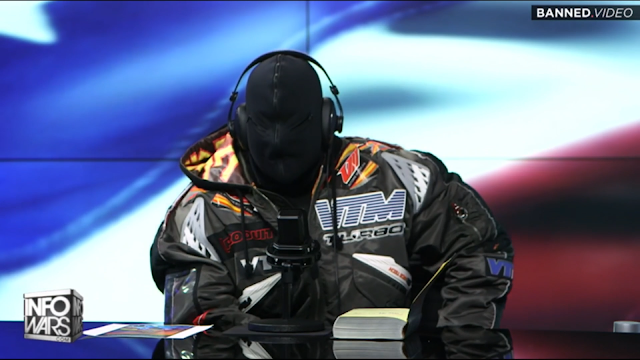
Alex Jones

Alex Jones once famously and astutely described himself with, "I'm kinda retarded." It's notable because "retarded" itself as a word is on dividing line between what's proper and poor taste. Alex Jones himself seems to be the battleground between appreciation for free thought and ironic veneration versus censorship and fear for speech to cause real world harm. What makes Alex Jones compelling is not that he's crazy, the mentally ill screaming in a padded cell won't sustain a crowd, it's that he's precisely half-crazy. When you're half-crazy you have the unpredictability that makes you indefinitely compelling. Here you have a figure who has undoubtedly caused harm in the world that's quantifiable and by his own admission. The related matter is how much importance we place on individual human agency. Perhaps Alex through naming names triggered the pre-disposed to harass families of Sandy Hook, but it does not seem intentional and does seemed informed by his own mental illness. The fevered fight over words makes itself apparent in the lawsuits. If there was criminal negligence on an aircraft a payout per death would max at $500,000 on the high-end. The successful suit against Jones for causing distress reached a verdict of about one billion dollars, indicating to anyone of sane mind a failure of justice.

Ye

Alex didn't shy away from controversy even as his trials remain on-going, he hosted Ye. The new mainstream liberal thought is there are no benevolent billionaires, and billionaires shouldn't exist. If this is true, they should love Ye. He rejected billionaire status, after all. I recognize him as a villain but can't help but admire him. He did what we all preach and espouse which is to shun money and material possessions in the name of integrity and personal beliefs, it just so happens many of his are reprehensible. He's a racist, a tragic figure, refreshingly honest. He trolled with intentionally inflammatory language suggesting his love for Hitler and the Nazis, under the guise of "loving everyone." Clearly, he's attention-seeking, amusing himself, and to some degree believes anti-Semitic tropes. But his sin at the end of the day is merely speaking his mind which contains incredibly ignorant insights. The ownership of any hateful act he inspires, though, lies within that individual. Chris Brown beat a beloved black artist and can still tour America, I doubt Ye the same. Many with domestic violence charges rebound. George Floyd was exalted of horrendous crimes upon his death. Many people beat, kill, steal, or sexually assault, and receive more empathy than a man who's merely a wrong and outspoken bigot.

Fuentes

During Ye's downward spiral he kept in close touch with other undesirables. One was Nick Fuentes, a hispanic white supremacist and self-professed incel who is canceled by banks, on a no-fly list, and hosts a popular show from his parent's basement. I find his unhinged, petty hatreds compelling to listen to in small doses. Reviewer Roger Ebert once said, “The Birth of a Nation is not a bad film because it argues for evil. It is a great film that argues for evil.” There is an equal elegance for a bad cause here. Nick is young, bright, charismatic and attuned to irony, making a lot of his reprehensible beliefs memefied and digestible to his audience. He reminds me of a young David Duke, the hate coursing through his ice-cold veins not yet crystalized and deforming his face into something demonic and unrecognizable. It will likely get there. Why free speech is important is that bubbles like these will form unchallenged and hence grow in strength and numbers to zero defense or counterargument. There's also a cynicism in throwing these people aside, as total cancellation suggestions that those wrong cannot change. When I see Nick I see a projection of isolation, an island made by his own intelligence, too stunted by alienation or insecurity or sexual hangups. He reeks of someone who sought acceptance and mentorship, was met with rejection, and tripled down into an even more hateful mess for validation and attention.

Roger Stone, Stefan Molyneux, Martin Skhreli, and the rest

Who could not love Roger Stone, the deranged drug-using bisexual, with Richard Nixon tattooed on his back, seething, shouting and grinding to teeth to nubs during the videos of his deposition? Or Molyneux, whose hate and insistence on IQ and genetics undermines the fact both his parents were institutionalized. Who could not admire Milo Yiannopoulos's feeble attempts to rage-bait himself back into relevance, or the way his legitimate intelligence tries to fight a worldview at odds with his sexuality. Who could not like Steve Bannon (#BanosDidNothingWrong) as he fights for the Little Man with his background in Harvard Business School and Goldman Sachs, using Bill Clinton's rape victims to undermine his wife's presidential aspirations, or trying to arbitrage digital assets in World of Warcraft. Who could not be charmed by the self-persecution and the unconscious self-parody of Andrew Tate. Who is not a fan of Martin Shkreli's attempt to make blatant the fraud that is generally par-the-course for American business.

The age of the villain

Villains are important, and not only because they are an inevitable bi-product of free society. A smart citizen will understand "the cost of liberty is eternal vigilance." It's a heavy cost, but preferable to the cost of a life suffering from a total lack of spontaneity and surprise that a focus on safety and surveillance would entailan ever-encroaching movement where every aspect of life is tabulated, categorized, and rendered inert. The distinguishing element in my chosen villains, is they exhibit a form of honesty about their villainy, if not forthright then by the brazenness and transparency of their behavior. Villains exist no less predictably than predators in wilderness. Unlike those predators, they operate camouflaged and cloaked from discovery, in a trend that's slowly changing with the increased access of information. Not only is this preferable from a diagnostic perspective, the world is more interesting when it shows its cards.

Saturday, February 11, 2023

The bet heuristic

Oftentimes when I'm struggling to determine personal belief about something I use a simple heuristic. It goes as follows: imagine the question or decision in the context of the bet. What are you betting? The entirety of your savings, skill, and material possessions. Your 401k, savings, your house and method of transport. You also lose the ability to readily and easily regain them, so you lose your skill. If you're a woodworker or pianist, you lose your hands. If you're a singer, you lose your voice. If you're a writer, your creative drive. You lose any ability for a bailout. Then, when you've accurately put yourself in this headspace, consider the initial question again.

The use of this heuristic is it cuts through self-deception and self-denial. Many deny the moon landing, claim the earth is flat, or believe that Hillary Clinton eats children. I imagine most would change swiftly with this level of skin in the game, and perhaps even only with it as a perspective. Though it can be used for serious decision making, the absurd examples are more fun to talk about.


I used this when considering the alien/Area 51 story of Bob Lazar. "Is Bob telling the truth?" Much of his story, personality, and demeanor lean toward credibility. He is intelligent. His rationale and reasons are well-constructed. It also helps if its an idea interesting, compelling, or personally fulfilling enough that I desire it to be true. When looked at it through the lens of the bet heuristic, the fuzzy, positive points get subdued and a more objective point of view emerges from the contrast. He has equally big issues against credibility, between sketchy college references, convenient migraines and running a whore house.

As compelling as his story is, I'd put money on Bob being a pathological liar. It's still an educated guess, but the heuristic helps me to my actual belief.

Saturday, January 28, 2023

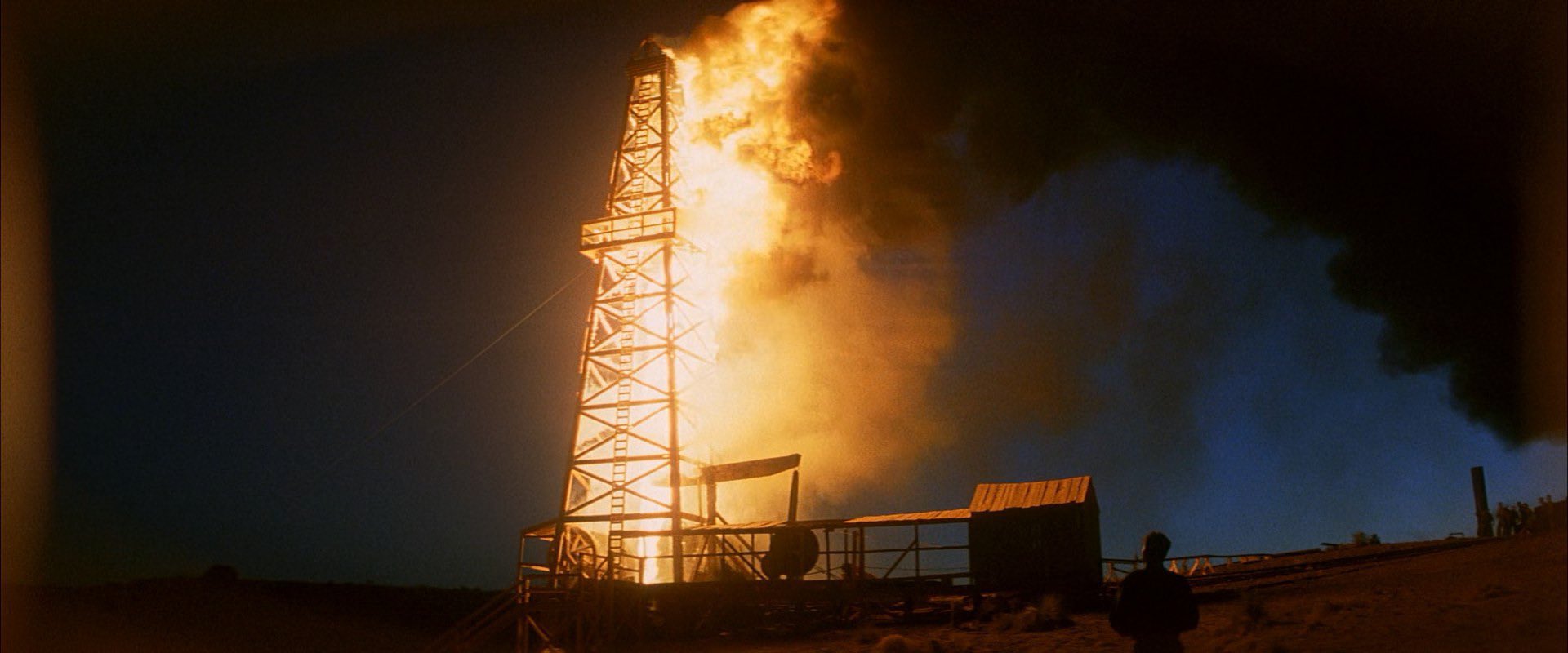
An analysis of There Will Be Blood (2007)

There Will Be Blood is a largely tonal film, made great by its beautiful cinematography, soundtrack, performances, set design, direction, and creative use of lenses. It evokes the feel of a 1950s frontier film in look and style but done expertly with modern technology. There's also a lot of metaphorical elements and symbolism in the film (e.g. marking the baby's forehead with oil) like is common with all the great writer-directors.

Somehow, P. T. Anderson beautifully photographs near-impossible scenes. In a way the whole movie is a metaphor for a man making it alone. It begins with the protagonist alone in a black hole maybe 50 foot deep, in struggle and in toil, with nothing but tools and a few explosives. He gets the gold. Only in scenes a few years later does he have a few more men, paid workers and believers in his vision, as he experiments and invents in ways to secure oil.

He continues, with an orphaned boy and a fake backstory to continue his career as an oil man. He has finally made himself a success and is a man of considerable talent. His con helps him succeed at the cost of isolating him. There's not too much violence for a film titled There Will Be Blood, making you question its title. Perhaps it's meant as ironic. There's no blood-ties. There's no familiar familial comfort in Daniel's life. His son isn't his. When Henry asks about his son's mother, he doesn't want to talk. He can't bear to lie more, especially to his brother. He doesn't enjoy or desire to explain himself in any capacity.

Of course, his brother isn't blood, either. Daniel has no connection to family. From not wanting to share any of his motivations, he finally opens up with Henry about wanting to own the nice house in the neighborhood, to have it, live in it, clean it, even raise children in it. This is the first time in seemingly his adult life Daniel has been honest with someone about his desires and moments later, he sees through Henry's deception. Henry says he knew a man who claimed to be Daniel's brother who died of tuberculous and used his story, there's a potential subtext where Henry may have killed him. When confronted Henry claims to be his friend and he's correct. The bond of them both being cons, similar in intent and manner, binds them more strongly than blood could. Daniel kills what is essentially his shameful shadow.


Daniel also has a lot in common with Eli, the false prophet. Daniel uses a child to sell a vision, Eli uses a church. They both manipulate. Daniel is better and can bully Eli. In turn, the rich, established oilmen try to psyche Daniel out into selling his property. You can see Daniel's insecurity as the self-made man from simpler means, as he grandstands before them upon succeeding without them. The oilmen see Daniel as he sees Eli, unworthy of their company, let alone as equal business partners.

Unlike The Master this story is more or less straight forward. Daniel Plainview might just be pathological pride, drive, greed and insecurity taken to its natural conclusion. He's chosen a life of success even over moral values, which blocks out the possibility of any love he may desire. Throughout the film there are cracks in his highly-driven, hellbent exterior where what's left of his humanity breaks through, often in his affinity for children.

If I were to speculate on why Plainview despises people, the first hint would be the irony of his last name. We see him make his own way, alone. Nothing was given to him, so why would he give any person a benefit of doubt. He sees simple people with disdain because they lack his intelligence, they lack a capacity for evil or to even see it as such. Daniel's dog-eat-dog mentality brings him riches, but he's not intelligent enough to see it brings him misery and a lack of closeness with those he loves. In the end all he has left are material possessions and pride. Were Daniel to admit the truth of his cons to himself the cost would be to see his life as empty, but also endear himself to others and to an extent gain sympathy.

The only time Daniel is forced to confront himself is during the baptism scene with Eli. Though Daniel views the church as a fraud, the humiliation he experiences here is the closest he ever is to human. So deep is his aversion to shame, when he enacts revenge toward the end of the film he can punctuate his life with pride by proclaiming, "I'm finished!"

Tuesday, January 24, 2023

Meaning in The Master (2012)

The Master I've seen maybe six times since release in attempt to understand it. My confused conclusion after the first few times was that it's just not the masterpiece I wanted, instead a story of dogmatism not told well enough. In an attempt to explain it now, I will almost certainly fail. It's made by a world-class director, and while there are more complicated films to dissect, that's mostly the result of them being bad or purposely abstract. I'll try.

Freddy is fresh from the war. He's been killing the Japanese. He seems to have PTSD. He's a man who belongs in motion. Still, his life lacks structure which may have ultimately led him to the Armed Forces, and explains his attraction to the Master. In a way the two central characters want what the other has. Freddy is a feral animal. At the start we see him masturbating at the beach, fighting, unable to hold down jobs, and injuring people with his alcoholic concoctions. The alchemy of his alcoholic creations does though show his potential, as does his eye for photography.

He forces himself to sea. It's essentially where be belongs. There he finds the religious group of Lancaster Todd. Todd's attraction to Freddy is that they are polar opposites. Todd is controlled, serious, well-mannered and weighs a lot, all unlike Freddy. But as the Master asks Freddy personal questions, he takes a liking to him right away, aided by a hint of recognition. I would say Freddy represents his younger self, and that free, emotional, reactionary spirit. He still yearns to be. Freddy wants guidance and not to be in a bad place emotionally or in terms of addiction.

Freddy impresses Todd with his alcohol experiments that he says contain "secrets." It makes sense they would drink these secrets before the personality test where Freddy reveals finally to someone the deepest recesses of his soul, that he denied the psychiatrists of the Armed Forces earlier in the film. He talks about murder, incest, his one true love. By the end of the scene, they go from characters familiar to each other to best friends. That's one way to bond.

From here you have the framework of the religious belief of Lancaster Todd and his school of believers. They provide the comfort of family but at a cost. You must remain generally on the same page as Todd. Doesn't matter how far they go, how extreme, with tales of time travel and past lives. You can never defect, your service in the church is to grow it and exhibit it in lifelong commitment. Freddie is a loyal defender of the cause, as referenced by his behavior toward the socialites in New York.

Then comes the curious party scene where Todd dances with women. The scene cuts and returns with all the women unclothed. This is the second major break from the rest which can be considered literal, the first being the reminiscing scenes with Doris. It's purposely ambiguous, but this seems more an act of Freddy's imagination. There's no clothing scattered about. It's way out of line for values of the time. It seems built for the subtext of the next scene, where Todd's wife is masturbating him in front their bathroom mirror. She seems to suggest she's okay with secretive infidelity but not polygamy. In the next screen a drunken Freddy is confronted, controlled, made to repeat pledges and slapped with probably the same psychosexual intent as used on her husband.

In jail, Freddy, is told by Todd, "I'm the only one who likes you." And it's true, Todd is the only person Freddy, a complex character, has opened up to. The backbone of friendship is trust, and it's easier to like someone when you know who they are. It's the same reason we like dogs, they're not mysterious, their motivations and behaviors are readily transparent. So far, Todd's psychoanalysis, however faulty, is the only time Freddy has allowed himself to be him. Why wouldn't he trust Todd who allowed him this release and who also holds many of the attributes that he seeks. The prison scene may be the point in the movie where their personalities are matched and equalized, as they're both reduced to shouting animals.

Freddy may have started questioning but remains protege at this point in the film. It's clear for reasons of ego and affection for Freddie, Lancaster makes him the focus of his bizarre psychoanalytical experiments. Also because Freddy is the most willing subject, maybe not the biggest believer but the one with the biggest desire to believe. Freddy is made to behave like a monkey, jumping between a wooden wall and a window to the outside world he can feel but not physically see.

By the time "Book Two" is released, you sense Freddy's influence on Todd's work. Todd describes the secret now in less rigid terms, as "laughter." He scolds a woman for questioning his choice to change his words from "can you recall" to "can you imagine." Freddy seems to notice this change in Dodd and it's not surprising during an exercise with the group, his makeshift family, he drives off almost as if leaving the nest. He's off to see Doris.

Of course, his former love Doris is gone, moved, and married with children. She was left heartbroken and upon marriage is left as 'Doris Day,' an actress and singer of the time known for her beauty. In a way this points to the undoing of Freddy's picturesque fantasy of the perfect woman. He gets over her. He has a vision, or dream, or a real life phone call in an empty theater and is encouraged to visit Dodd at his school in England.

Dodd and his wife attempt to gaslight Freddy in his need for help and usefulness to the cause. He's not biting. Todd finally submits and serenades Freddy in song in a final attempt to win his favor and Freddy understands he's more powerful, even with less structure, and no longer needs Master.

The movie ends with Freddy attempting Todd's psychoanalytical tricks during sex but he laughs and mentions his dick fell out.

Summary

This movie is difficult because it's experimental and its design instinctual. It flourishes for the same reason it fails, its in uncharted territories and swinging for the fences. It's a joy to watch it work and not work. The main focus is belief and not only religious belief, also desire, and what is there before us in reality. If there's a central message it may not even be entirely against religious institutions as it might suggest, but instead to say, you have final say, and if its outlived its usefulness you can ride off into the distance.

Wednesday, January 11, 2023

Andrew Callaghan's content matches his accusations

Like many I was a fan of Channel 5 (All Gas No Brakes) during its initial viral rise for its "man on the street" style interviews. It reminded me of previous, relatively minor e-celebs who have done similar work, or Dave Attell's Insomniac show in the early 2000s. It's a simple enough format. You point the camera at people who are a little fringe or absurd, listen objectively, and the content creates itself. If the interviewee is particularly nasty the camera provides enough rope for the person to hang themself, but generally these videos work because they're funny and humanize people despite their misguided beliefs or odd personality quirks. Part of the allure is the camp and cringe but with a balanced and empathic editing and editorializing this becomes forgivable.

Something seemed off around early June of last year with Channel 5's "NRA Conference" video, it started a pattern seldom-seen in the videos until around this time of excessive editorializing and ideological slant, with clips from both sides built to fit a narrative. It also includes Andrew Callaghan adding just himself to the screen and interjecting. The word "journalism" began being paraded around the community which was bizarre, then a Hot Ones interview on the Youtube recommend algorithm made me question if he is in large part a media-whore.

A lot of this contradicts the golden rule of journalism to not become the story. You could defend this under the phrase "gonzo journalism" but this doesn't sit well with me. If gonzo is meant to forgo objectivity and add fiction, most media organizations do that by accident, and op-eds on purpose. VICE, Louis Theroux etc. regularly embraced subjectivity and engaged in drug use or in rituals to tell a better story. Werner Herzog fabricated scenes in certain documentaries to get to a deeper truth. Andrew's "journalism" by comparison is simplistic, shallow, and often with an insistence of having himself front-and-center. As a witness to an adult film award ceremony he played a perfect host.

Around this time I noticed, and put in my notes:

"Channel 5 went one-sided and preachy and fame-chasing with a quickness. Instead of an ironic witness to absurdity, it seems cynical and mean-spirited to its subjects, typically born of unfortunate circumstance."
I also wrote having finally understood that, Andrew's the type of person who, were he not holding a microphone, would be one of his subjects. Before that he was a tall, lanky man with bushy hair and bad posture in an ill-fitted suit and acne, and not without a sense of comic timing. It was contrived to a degree but not cynical and that's what made it compelling and digestible. This re-calibrated that dynamic to "a show making fun of the mentally ill," and the show's profile from there began to grow exponentially. Even that in itself isn't the biggest problem, it's being that while posturing as part of the fight for social justice. Nothing arouses distaste in me like holding two completely disparate values and cynically forcing them together for profit.

Only days ago Robin Young, a perfectly respectable radio personality and interviewer, asked Andrew a basic boomer question about his willingness to speak with Alex Jones. The glib response and laughter made the rounds, as if lifting weights and drinking alcohol with Alex was an act of courage required to expose him as mentally unhinged. I began then writing this article with a quote as a placeholder. Then, before I could fail to ever launch it, his rising star exploded. Through unfortunate circumstance he killed his career in spectacular fashion coinciding with the release of an HBO documentary titled This Place Rules.

Andrew's documentary is already a non-starter because also on HBO is Q: Into the Storm, which provides a rigorous look at Qanon and the events of Jan. 6 from a much more objective standpoint. This Place Rules seems more like a forced hodgepodge of footage from events strung together into a narrative. Instead of tackling any real psychology of belief it focuses the visceral reaction you get from witnessing the mentally ill behave. It reminds me of Borat where some people considered it brilliant social commentary as opposed to just hilarious depictions of stereotypical behavior encouraged by its stereotypical protagonist. In Andrew's attempt to take a sober look at America all the humor is removed.

The trajectory of of This Place Rules and Channel 5 toward mean-spirited and more simplistic interpretations of political events seemed like they would eventually have to coincide with a backlash or a crash and burn. This happened with multiple sexual assault allegations against Andrew Callaghan days ago. If he took a step back from the limelight perhaps his work could've survived but he's facing a big problem summed perfectly by a Redditor:

"His audience are the cancelers."
By delving into the world of simplistic answers he's garnered a simple fan base who won't look into the nuance of his actions, and there's now a vacancy for the relatively basic content he provides for someone with a clean slate to fill. There's a market for people who believe Alex Jones alone instigated Jan. 6 despite that he spoke several times on the day to protest peacefully--a point ignored in the documentary--but not if you yourself are a controversial figure. I hope he makes right by his accusers, and he has enough talent that I hope for his redemption. Because of the audience his work cultivated it seems unlikely and the ending to his documentary ominously counterpoints his predicament: "There is no end. This is only the beginning," Andrew says in a darkened sound stage before exiting the building.

Sunday, December 25, 2022

Aftersun: The Year's Worst Film

Aftersun is the film of the year... that is critically praised, slow, realism-focused to the point of boring, melancholic, depressing, and a tedious mess, shot on lifeless, blue-hue digital cameras. It's a slice of life. So is waiting in line at Dairy Queen. There needs to be some story and interesting plot or visual elements interspersed. Other bad films of this style include Blue Valentine or Chop Shop, though they had a few moments. A decent example of this style done well would be The Florida Project. This is the exact kind of movie more mainstream cinema-goers cite as they avoid great understated films. We're talking long boring shots and Tarkovsky this person is not.

The astonishing aspect of this film is you come to understand how little can happen in 15 minutes. The tragedy this director tries to portray comes across with equal lack of distinction. What could've made it better was any hint of the purpose the story was meant to take, and any hint of the form used to express it. It's not hard in a nearly two-hour running time to include a minute and 30 seconds about a character's motivation or future ambition. Seeing someone cry alone in a room does nothing for me compared to understanding why. Instead, you have a depressed, deadbeat dad type who's trying to do the right thing. That's many dads, why care. Then you have the 11-year-old daughter with the implausible emotional maturity and quips of a 17-year-old. That can be overlooked, but there's no background into the divorce, no discernible problem in her other than annoyance, and near zero indication of what these events mean for her future. I wasn't rooting for her either, she's a wooden chess piece moved around a sterile screenplay.

Toward the tail-end of the film there's a moment the two are alone on a boat and there's finally a word of empathy and character development between them. Thanks, the first proof this movie wasn't written and recorded by AI comes before the climax. The conceit here seems to be that stillness and quiet is enough to sell something emotionally evocative and incur a response. It's not, not without interplay with a little movement, a little heightened happiness to contrast the grief, a little unquiet to liven up to at least baseline human emotion, so you actually feel down when that time comes. Instead, it's a two-hour Lexapro commercial. If the entire film had a Paxil logo in the lower right hand corner this melodrama may be a perfect satirical comedy. Instead, you may be able to use this film's dull bleakness to break prisoners and secure intelligence without breaking international law.

Aftersun is #1 of the year for BFI, so you know it's not a good film. BFI disgraced themselves this year after previously curating excellent top 100 all-time movie lists once a decade, separated lists comprising both the choices of critics and directors. Paul Schrader took them to task for a new-found ideological slant to their ratings on social media. It's a bad sign because Paul is essentially a film-maker indiscernible from a feminist, starting with Taxi Driver--a film that dissected self-defeating, pathological male ego and its related drives and desires. He's also known for correctly stating Taylor Swift's music and concerts affirm life itself. On BFI, he had the following to say:


BFI
's re-tuned criteria suggests a change in the representation of woman-made films on the list, leading to a frankly confused and forced re-ordering of films. Yes, men are over-represented. There is a ratio of about 25-to-1 male directors versus female, they should be. It's more sexist to assume it's the failure of women or failure to recognize their artistic achievements, rather than recognize it could be they have different, better priorities or exist within a context of historical injustice in the arts. Yes, it's tragic when a film is critically overlooked as with Kelly Reichardt's brilliant First Cow. It's also unfortunate and unfair when this happens the other way. I suspect an over-correction could explain the attention given otherwise less than brilliant work.

(Footnote 9/30/24: Jeanne Dielman is a radical yet legitimately bad film and putting it at number #1 on the most respected list threatens to turn off movie-goers for a decade, but this would require another post. Footnote 3/27/2025: Generally, despite the clumsy implementation, including more worldly films is a step in the right direction. Instead of placing the safe, universally agreed upon film for the 1-spot quote of their top ten, they should watch more film by woman directors. Or incorporate some type of ranked choice.)

I thought Nope was the year's worst film, which is the worst thing I saw this year before Playtime by Tati. I would watch Playtime twice more before rewatching Aftersun. I thought it would be the hidden gem of the year with so many top spots. All those critics deserve to be hunted and pelted with Kinder Surprises, but they would love it like the groveling masochists they are. This film isn't #1, it's a 1. As an olive branch of optimism, the acting and camera work are there. The main problem with this may be a matter of tuning tone and pace, adjustments there could result in powerful future films. (I forgot to add this so I will shoehorn it in like my BFI-bashing: large plot points in 3-second splices under strobe-lights is not an effective narrative tool.) Until then when it comes to Aftersun, ask yourself if you want to spend two weeks at a resort with a depressed dad and his boring daughter in damn near real-time.

Sunday, November 20, 2022

Post for the year 2022


It's important to try, keep on things, and post regular and pertinent content.

Thursday, December 16, 2021

On intelligence

The Uncertainty Principle: It proves we can’t really ever know what’s going on

If you’re dumb by design you can never fully know it. I’ve had the desire to write on the stupid approach to intelligence. Often when writing I’ll have this unwelcome inclination to sound like a good orator or otherwise clever. I fight this instinct because it goes against the general purpose of what would be an objective and scientific approach to inquiry. The purpose of language is only to communicate and an essay expressing a philosophy doesn’t have the same urgency for perfection a peer-reviewed paper might. Simplicity is the ultimate tool, and an excess of syllables unnecessarily complicate a message. I believe this impulse is indicative of how intelligence is perceived as a whole.

The easiest way to attack problems with our interpretation of intelligence is to look at IQ. Previously, I always looked at IQ with suspicion, as wasting time and rigorously preparing for an intelligence test seems “low iq,” before we get into the vain impulse to brag and socially peacock around your intelligence with a ranking or numerical score. After looking at the criticisms these feelings were confirmed. The test doesn’t work for several reasons. Namely, you can tell this because there’s a huge degree of variance even between people’s own test scores when taken multiple times. Also because it has a great ability to identify dumbness, but is wildly varying in the higher numbers on any quantitative scale (NN Taleb). One of those scales for example would be survivability and how you measure this is anyone’s guess. In my opinion an IQ test can’t work for the same reason we generally can’t predict the future. But say you were going for survivability, you could do some sort of base measure, a nuts and bolts estimate to do with a person’s financial success. Already, this seems an incredibly weak underpinning as we aim to predict a person’s ability to navigate an unknown, virtually infinitely complex future world.

But it gets worse. Tying a person’s success to their ability to survive, or their ability to earn which is our flimsy but best chance of a correlation (with all its variability and noise), is predicated on an assumption that survival is intelligent. Interestingly, the great philosophers like Alan Watts or Albert Camus often reduced the sum of philosophy to the question of suicide. It makes sense. A philosophical interpretation of existence will be examined best through the contrast of not existing. Whether to live, they determined, was the essential question. When judging intelligence, it’s clear Isaac Newton and Einstein are near the top of the known persons. But there’s an additional qualifier here if you’re looking at it through that philosophical lens, they were the smartest people who were also convinced for whatever reason to be driven and motivated in their pursuits toward an end. This version of intelligence is dependent on success predicated by ambition. Surely there’s been many equally intelligent people indifferent to any pursuit that would have them seen written into the pages of history, and others undoubtedly were intelligent and yet met existence, understood it, but saw futility or went without curiosity and committed suicide or otherwise resigned themselves in life.

Undoubtedly, the great intelligent men of history also had a bit of luck on their side not to fall to some misfortune or plague. It makes me question, were Julius Caesar and Genghis Khan really great men or were they just the best bold visionaries who also didn’t happen to take an arrow to the chest. Maybe T.E. Lawrence stood up to gunfire and survived, but if that’s true, certainly many more people who thought their existence was divinely-ordained were shot dead and never written about. In light of this, a lot of success is due to luck and explained by survivorship bias.

This echoes of the “great man theory,” which basically suggests a few persons of extraordinarily talent drove and explain history. I dismiss this because it credits the crest of the wave while ignoring every other part of the process. It seems more probable the conditions created by the collective enabled these individuals and made those high water marks inevitable. That doesn’t mean certain people’s discoveries didn't save us decades. I only wish to dispel the gross reductionist view and venerate to some degree the nameless everyperson for their part in the process.

In short we give too much credit and not enough. There’s an unquestioned belief that progress is possible and that it is good. That life, progress and its pursuits are innately intelligent for seemingly no other reason than we are alive and therefore compelled to stay so. Call it the life-bias, but if we’re to exist it seems important to remember this contrast to retain the right perspective and take life unserious and in stride and revel in its novelty. To recognize intelligence in any other way is likely stupid and to miss the point entirely.

This could explain the stereotype that smart people are miserable. It’s easy to infer more complex people will have greater difficulty and less resources when it comes to solving their more complex needs. Naval asks a great question, though, “If you’re so smart, why aren’t you happy?” A great question for many not-so-smart smart people. But there is also an alternative, the masochistic intelligent who invite painful thoughts and situations into their lives as a form of discovery, and help mediate or navigate future trauma and pain. In short, the reason some watch horror movies or TV shows about sociopaths.

Intelligence seems to come with undue focus. There’s no correlation between it and morality. There’s a lack of appreciation for the wide, diverse systems that enable the experiments, conversation, and conditions for the inevitable leaps in science. There’s not enough challenge to the unproven yet widely held assumption that progress is the imperative collective goal. There’s a lack of study in the idea that the intelligent individual might meet the complex problems of the world with indifference.

Often people fall for the trap of cult of personality and for them intelligence can be defined by self-proclaimed genius, genius itself being a word of mythical quality. From what I can understand true genius is essentially not quantifiable. Some self-proclaim, some don’t want credit, some saw into the future enough they created solutions and prevented wars before they began, some understood the game of life and decided not to play it.

In considering my desire to write this my motive may be simply the miscalibrated view of intelligence. I see no innately intelligent or rational component in engaging in existence over not. I see no intelligent correlation in ambition over indifference. I see a vast disparity between con artists who claim to be geniuses to place themselves in that light, versus others smart enough to see fame and accreditation are often overrated or not worth pursuing. I see an excessive amount of credit go to problem solvers and not enough credit go to people who prevent problems from ever starting. I see the vast majority of the attention on the “great men,” less so on the collective’s daily contributions and inventions without which those great men would not exist in equal capacity. I see an unscientific acceptance of science as an irreproachable and final authority, and this elitism doesn’t seem a wise way to advocate wisdom.

There’s an entire world slowly, day by day inventing and perfecting ideas that get engineered into the reality, and the same with creating the complex systems to keep these emerging inventions running smoothly and compatibly with the inventions of the past, while leaving room for things to be expanded upon in the future. It seems an impossible task in a world of billions but this also means you have that many more minds working towards solutions. This world has another side defined by what it doesn’t do and doesn’t create, alongside with what measures are taken to exclude unfavorable outcomes. By the time you include ambition or desire to participate in life itself, it seems impossible to quantify and current measures are uninspiring and unwise.

Thursday, December 2, 2021

America undone

Dystopia won’t be a destroyed city, or even a gritty one. It will be white, bright, and clean, just like your thoughts are mandated to be.

No one wants to work and you can’t blame them. The culture of easy money from the finance industry, tech, and celebrities has trickled down. The hard work ethos has some truth but more often than not it’s a tool to exploit people, and to divide those with no income and those with just slightly more. You can make 200k and you’re still closer to a McDonald’s worker and a serf compared to people with real money, the kind that comes from passive income investment properties and stocks. You don’t even need a good business or business model, by the time a company’s failing you could have already sold it in a public offering. And I know this sounds like ramblings in a goth’s scrapbook but I’m goth and this is correct. 

There’s inflation that’s knocked 96% of the dollar’s value in 100 years. The Fed admitted this week maybe it isn’t transitory. So it’ll get worse. It’s always been a way for governments to steal people’s labor by spending that money before it affects the average person. To be fair socialist countries seem to work the same, if not worse, because a power consolidation always forms and uniform pay doesn’t always incentivize innovation or harder work (an oversimplification). But even still, the median American pay is about $35,000. If Elon Musk for example was operating at 100x the mental and man-power of the average person by median wage this would be 3.5 million a year. Of course people are confused by his net worth not realizing it’s tied to liquid assets, people placing bets on Tesla as a future energy company, and pricing in absurd future earnings potential. If he sold and gave all his money away it would decrease in value during the sell off, not to mention due to its connection with indexes potentially trigger a collapse in the stock market. The fact an innocuous tweet can cost a company 100 billion dollars should indicate the market operates on hopes and dreams more so than any connection to reality. And that’s just one person.

As much as you can shit on Elon and Bezos and Zuckerberg, at least they’re to some degree providing a service. If they paid their fair share the government would still be trillions in debt, because governments like seemingly any organization with big administrative teams get bloated and expensive when the people at the top are basically deciding their own salaries, hiring an assistant for their secretary’s dog-walker, and entertaining conflicts of interest to make more money through favors, stock market manipulation and insider trading. Really, how did Nancy Pelosi make $100 million on $200,000 in salary. Banks and hedge funds are the same thing, making some of the largest amounts of money providing the least amount of service. And money is so powerful, humans don’t matter anymore. Super computers and algorithms in technology by companies like BlackRock exist to price in, calculate, and profit from catastrophic events that haven’t happened yet. They have 9 trillion in assets. I believe this AI is in charge of society (see Hypernormalization documentary) along with banks, money picks presidents, with leaders being mostly performative and symbolic at this point.

Winner takes all capitalism is a nightmare. China is our competitor because they have cheap labor and complete control of their country, plus they steal all our intellectual property at will and modify it with their spyware. This gives them a huge advantage because they get all the data that would be highly illegal here to make their decisions, and means they will be ahead of the United States in terms of data and information, and through this erosion of privacy better able to implement dangerous, power-consolidating technology like social credit scores (see Whitney Webb’s work). What happens if China has more cheap labor and less regulation to throw into innovation during the AI arms race. People want limitless clean energy but what happen when a country with a cheap factory force creates endless, deadly solar-powered drones that blot out our skies. Technologies are dangerous without some universal moral backbone which our world is far from.

So to go back to something basic, I don’t know what the perfect answer is. But the fact we can’t figure out something as important as healthcare. And this shows itself because even during the pandemic many prominent health officials and organizations both lied to people and seemed to have no idea what to do during a pandemic. What were the people at the CDC doing for the last few decades if the emergency response was handled so poorly. Nothing was done to calm or universally inform the public. Key positions and recommendations were changed to and from several times, despite precedents for pandemics existing in Asia. The Trump press hearings were a shit show. Without a fix to this you’re going to have more societal derangement, the lack of fairness that drives people even further to mental illness, more Mathboi Flies driving into people and children.

And largely this is an effect of greed, a pathological desire for more. Like in this probably fake anecdote, JP Morgan in response to Tesla’s free energy device says, “If it’s free, where do we put the meter?” I don’t know but if we had more energy we would have progressed more quickly and JP Morgan maybe wouldn’t be dead or would have at least got to use the internet. Instead people go for the satisfying short-term, and would prefer the illusion of power over something or someone to inhabiting a better world where they are not the star player.

Yes Twitter shadow bans (why Twitter is toxic)

A pathological paternalistic authoritarian and Nurse Ratched
Previously news came from reporters on scene with access to satellites and giant video cameras. Now that every citizen is a videographer, ever-present at all scenes, instantaneously able to communicate through internet access, the new frontier for breaking news is social media. With Twitter leading this revolution (for now), it must come with an incredible power to shape public opinion and a sense of responsibility to ensure public safety. It’s clear Twitter as a company has an ideological slant. Jack Dorsey himself admitted this on Joe Rogan’s podcast, stating conservatives at his company are afraid to speak up. With Dorsey stepping down as CEO and new rules requiring permission for media use, there’s a strong chance the goal is censorship and to further their ability to shape news and narratives.

Does Twitter shadow ban?

Look up “Does Twitter shadow ban?” and this article comes up:

Setting the record straight on shadow banning - Twitter Blog
Jul 26, 2018


“We do rank tweets and search results. We do this because Twitter is most useful when it’s immediately relevant.”

Translation: we decide for you what’s useful and have a ranking system of questionable practices.

It continues...

“We must also address bad-faith actors who intend to manipulate or detract from healthy conversation.”

Translation: we shadow ban. Again this doesn’t say spam bots or Russian spies. So who decides what constitutes a bad faith actor or someone who “detract[s] from healthy conversation,” or what healthy conversation even entails? Calling for healthy conversation is innately political, certainly you could not argue it’s apolitical. Memes and shit-posting are the junk food of internet dialogue, rarely healthy, yet I would see no reason to censor or otherwise curtail them. I’m confused by people who can vent their opinions publicly online to theoretically billions of people and are surprised when some of the reactions are pointed or uncouth. I’m surprised when tech companies believe it’s at all possible to try to shape billions of conversations in real-time and reasonably understand their context, tone, or irony. It’s clearly a problem you can’t address without making worse.

A bad faith actor is decided by:

“2. What actions you take on Twitter (e.g. who you follow, who you retweet, etc)”

“3. How other accounts interact with you (e.g. who mutes you, who follows you, who retweets you, who blocks you, etc)”

So get this, they don’t shadow ban, but they do heavily reduce your visibility in a ranking system from being seen based on the people you follow and who you like. Of course, you might also get this treatment if you are followed by someone who is a “bad faith actor” against your will. This is also the case if you’re ignored or blocked.

They act as if this is complicated. You don’t need a complex algorithm. Most popular, newest, oldest, random (+ your convoluted AI shadowbanning system). From there, delete spam and anything unlawful. If you don’t want swearing, put a filter for it that can be turned off. You don’t get to decide who is acting in bad faith, not without ruining your platform. What does this even mean. Can you not have a bad day, a snide or sarcastic comment, a temperamental disposition? Can you be anything but positive? Can you be extraordinarily negative if you have the right political leanings?

It’s a big deal. If you get banned on Twitter you lose access and the ability to interact with politicians, police, and emergency services.

In addition to them admitting it, here’s more hardcore due diligence:

Many posts have a “show more replies” button even if the thread only has a couple responses. The responses often include aggressive language or references to harsh topics like pedophilia. Regardless if it is relevant to the original thread, these are put into a quarantined area, and within this is yet another layer called, “show additional replies, including those that may contain offensive content.”

Why is Twitter hostile?

My theory is the two are related. There’s already bluechecks and follower counts to give the famous an amplification of their words. In addition to this, the masses of “voiceless” people go not only unheard, many are actively silenced. By being labeled a bad faith actor, their words suppressed by algorithms informed by political opinions, potentially furthering their alienation and creating a reactive desire to dig their heels in. Its simply an incredibly cruel thing to do to give people the impression of a voice or participation, left to wonder why even their innocuous observations inspire no response. I imagine this is done: to protect celebrities and persons of power, out of paternalism, to dictate narratives, political aims and “healthy conversations,” and to please advertisers. A website with an emphasis on celebrity and status, fomenting an increasingly unhinged group of the shadow“ranked,” where conversation is already limited in length, is a recipe for the horror show it is now.

What is the fix?

Firstly, this is not going to happen. It would be like expecting the NRA to go woke. But, stop trying to fix it. Crazy people are a self-correcting problem. They are ignored naturally like they are living dick pill advertisements. Make the censorship an optional setting, make all public comments visible to everyone (with blocks focusing on interaction). What will happen is eventually decentralized social media. In the meantime, Twitter will continue to be the place where you get mega e-points for seeming virtuous rather than being it.

Wednesday, June 2, 2021

What I’ve learned about markets

A few have asked so I’m typing this out. Most this information isn’t new, it’s my interpretation of it and what I think is the most valuable. So far, I’ve had success and over 100x ROIs (not crypto) in what’s probably preparation + luck. Not financial advice.

Time in the market > timing the market - most important rule. “You miss 100% of the shots you don’t take.” Stanley Kubrick and Steven Spielberg agreed the hardest part of the job is getting out of the car. The most successful events in the market came down to just a handful of days. If you don’t have some exposure to the market you will miss those parabolic leaps when they do happen. So if you’re not in the market, or don’t have sufficient capital in it, or your cash is “settling” from a day-trade meaning you can’t access it, you’re going to miss out. Individual days of parabolic success are the same for individual stocks, so if you’re not in before the spike you don’t benefit. Investor Rick Rule suggests being down 50% is the price you pay to be up 400 to 500%. Meaning, long term gains require the patience and foresight to withstand the price volatility that is likely to happen before big gains. In short, it’s better to be a stumbling, clumsy investor more often than someone trying to time the market so precisely they are paralyzed by indecision.

Avoid risk of ruin - the second most important thing is simply don’t be over-invested and take controlled risks. You generally shouldn’t have any money in your investment account that you need to take out unless it’s for another investment (house, business) or you’re making enough gains through investments where it’s akin to income. If you are over-invested you may end up taking money out of investments at a loss that you still believe will be profitable in the mid to long term. Try not to invest money you may need for personal use in the short term for this reason. And don’t trade with money you can’t afford to lose is terribly obvious advice. Avoiding risk of ruin seems to be one of the most important aspects of trading. It goes with the saying “Bulls (betting with the market) make money, bears (betting against the market) make money, pigs (dummies who yolo) get slaughtered.” If you receive a million dollar inheritance and YOLO it all into dogecoin at .45 you could double your money but you could also lose 90% of it. Avoiding risk of ruin might be say, putting 95% of it into safe blue chip stocks and only putting $50,000 for a controlled yolo. This way if your brilliant investment idea flops you can recover. Avoiding risk of ruin means you get to keep the lights on and try again.

Pareto’s Principal - this is something I first learned about in Peter Thiel’s Zero to One outlining his success in creating PayPal and investing strategy. Pareto’s Principle is essentially a rule of thumb dictating 80% of results are driven by 20% of the effort. It’s a way of making a calculated diversification strategy. For example he explains when looking into an industry, he will invest in a handful of companies with the idea each company must have enough potential for success to cover the potential losses of the failed companies. This is the same 80/20 strategy. For example, I’m sure cultured meat has huge potential for the future. Many of those companies will fail but if you can bet on the best horses, with the huge upside potential only 20% success could cover your losses and achieve great gains.

Probability - Nassim Taleb pointed out a foolish investor who said he doesn’t mess with stock options because 90% of the time they expire worthless. But he added this means nothing, without knowing what you stand to gain the 10% of the time you do win. If it is weighted with gains in the thousands of percent that has to be part of the equation. Taleb in The Black Swan also talks through the analogy of heads and tails coin flipping, and how that could be imposed upon the stock market if you’re talking about many different investments or stock options priced low enough to hedge against the low probability they will end “in the money.” But unlike a coin flip, even a little bit of knowledge changes the landscape of probability in your favor dramatically.

Psychology & strategy - despite emphasis on the fundamentals the market is too big not to be in large part psychological, which means speculative trading has huge influence on it. You can have gut-feeling traders who make an investment on a news story, then the slightly more informed trader who trades speculating on what those traders will do (e.g. buy the rumor, sell the news), and you can have the super serious fundamentals trader who still have to take speculative trading and rumors into account, and then the high-level hedge fund people who have to navigate and manipulate the entire picture. It’s important to do some mental accounting to have a strategy that works for you and your psychology. Most people are fine with limiting risk to their safe 401ks. Some want to actively invest but can’t handle seeing red day after red day in their trading account, so they need safer investments but also to hope to get in after a dip for a better entry point. Then there’s the people who ride large, violent fluctuations on the high risk, high reward spectrum that are willing to brave near-ruin for a disproportionate gain.

Up/down - calling back to the probability section, the coin flip analogy is important. An investment is essentially always going to be worth more, or less. From there it’s up for an investor to decide which way it’s going and for how long. It’s up or down. This is the case whether the play is entirely speculative or not. This is the case of whether it’s a good company or Enron. This is the case regardless of how good or bad the fundamentals look. You could have something with great fundamentals but where the public sentiment is completely sour and in that case it would be better to short if there’s no catalyst for that opinion to change. A good decision weighs sentiment, speculation, catalysts, due diligence, potential for future earnings, and fundamentals, yet sometimes just one of these can save you time by inching you towards yes or no.

Take the L - “Stonks only go up” is of course a lie. Sure the S&P and major indexes go up, that’s because they trim the losers. And even good stocks don’t go up in a bear market, sometimes for years, so if you need access to that money you end up taking a loss. In stock picks where the information has changed or the catalyst you saw for market gains has been proven wrong, cut losses. Many people fall into the “sunk cost fallacy” and never want to take a loss. -30% can quickly turn into -60%. That’s better off into an investment you believe in.

Paper trading is kinda bs - unless you’re of an age where you have literally no money I believe paper trading to be a waste of time. Even the average Robin Hood trading account of $250 is more worthwhile because of skin in the game. There is no pain in losing imaginary money. Losing or gaining real money is informational and it properly calibrates your brain for risk.

It’s all a pump and dump - nearly everything has the buy low, sell high dynamic. After studying a bit of the financial markets it’s easy to see everything as a pump and dump. In conception you convince your mate you are worthwhile and have resources or childbearing skills. Upon your birth, hospitals artificially inflate fees to gain as much as they can from insurance companies. It’s the nature of salesman and advertisers. Government officials do it with false campaign promises. Colleges exploit the government promises of tuition by requesting more. If the government can’t tax you they can print money to take your labor by devaluing currency. It’s promotion and under-delivering. It happens with hype-beasts. It happens when flippers and scalpers suppress availability to create demand. It’s even in death, as funerals are a traumatic and stressful time and businesses know people aren’t trying to look for a bargain when dealing with the death of a loved one. Of course it’s in the market, so take suggestions with a fair amount of skepticism.

Manipulation - market moving institutional investors and whales can all have a huge influence and create waves to take retail (regular person) money by shorting or funding with tens of millions or billions. Elon Musk probably pumps Dogecoin to distract that his own company’s stock is overvalued. I believe it happens on news organizations like Motley Fool or Seeking Alpha. It happens by regular people on Reddit, Twitter, Investorhub, Facebook groups, Stock Twits, etc. Some try to sell others on the stocks and some are just trying to sell themselves. So not only do you need to do due diligence on your stock, but any person or a company who might wish to exploit it.

Learn to like bleeding - there’s probably a level of intense conviction required to make truly massive market gains. It requires discipline in the form of the lack of emotion in the pain that is losing money. And it is painful, because you’re risking livelihood and future security and above that peace of mind. It’s an unnatural demand but a necessary part of the process. You wouldn’t expect to get good at something without misses. Many live their lives in a poverty and scarcity mindset. It’s a visceral feeling to dismiss that and welcome what comes and try to ride the ups and downs, and why not. Tomorrow I bet the sun comes up but it’s not guaranteed.

-----

Notes:

Important things that helped, so far

The Art of Thinking Clearly, a book by Rolf Dobelli describing common thinking errors and biases. It’s a great resource probably because he essentially plagiarized, which means you can take the ebook without guilt. It’s to the point and can substantially refine the way you think about things by outlining what to avoid.

Naval Ravikant is a no bullshit entrepreneur and investor. He wrote short and succinct ideas about wealth creation in Twitter threads that were later condensed into a 3.5 hour YouTube video how to get rich, titled in a sexy way but it’s really about responsible wealth creation.

The first 100 pages of the 4-Hour Work Week by Timothy Ferris. That’s when he outlines his best points and shortcuts. The rest didn’t feel equally as important.

If you have more time, the audiobooks of Nassim Taleb, particularly Antifragile and The Black Swan narrated by Joe Ochman. In terms of nonfiction probably among the best books in terms of good ideas per capita.

What I Learned Losing a Million Dollars is a book that is sort of the counter to the stereotypical how I became a billionaire books. You can probably learn more from failure than success but it’s not as sexy.

Zero to One by Peter Thiel explains the story of Paypal and how to invest strategically in a compelling way.

 A Random Walk Down Wall Street for a historical perspective on the market, explaining previous bubbles, hysteria, and index funds.

Comedian Jessa Reed on money and avoiding the poverty mentality.

Keith Gill’s (RoaringKitty) early assessment of $GME, here, well before the pop is great example of value investing and due diligence from a retail(-ish) perspective.